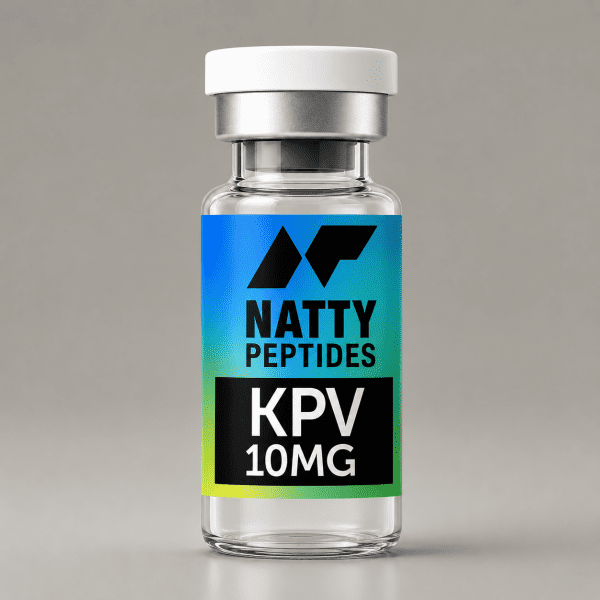
Why Choose KPV? KPV is a synthetic tripeptide derived from the C-terminal fragment of alpha-melanocyte-stimulating hormone (α-MSH), distinguished by its potent anti-inflammatory and antimicrobial properties studied in research applications . Understanding its origins and distinct mechanisms provides important context for researchers. The History & Origins KPV (Lysine-Proline-Valine) is a synthetic tripeptide corresponding to the C-terminal amino acids 11-13 of alpha-melanocyte-stimulating hormone (α-MSH) . α-MSH itself is a 13-amino-acid peptide hormone produced through post-translational processing of the larger precursor molecule proopiomelanocortin . It is an ancient peptide found in barrier organs such as the gut and skin, suggesting a fundamental role in innate host defense . Research in 1989 first detailed the isolation of the KPV tripeptide and evaluation of its biological potential, establishing it as the key amino acid sequence responsible for many of α-MSH’s characteristics . KPV was identified as the active message sequence for α-MSH’s antipyretic and anti-inflammatory activities, with studies showing it exhibits activities in vitro and in vivo that parallel—but are more potent than—those of the parent molecule . How They Work: Distinct Mechanisms KPV operates through multiple biological pathways that make it valuable for inflammation and infection research: Anti-Inflammatory Research Mechanisms Inhibits pro-inflammatory cytokine production and reduces activity of nuclear factor kappa-light-chain-enhancer of activated B cells (NF-κB), a key transcription factor in inflammatory responses Affects multiple pathways implicated in regulation of inflammatory responses, including expression of adhesion molecules, chemokine receptors, and production of pro-inflammatory mediators Modulates inflammatory cell proliferation, activity, and migration Shown to reduce edema and inflammatory cell infiltration in various research models Antimicrobial Research Mechanisms Demonstrates antimicrobial effects against significant pathogens including Staphylococcus aureus and Candida albicans, occurring over a broad range of concentrations including the physiological (picomolar) range Shown to significantly inhibit S. aureus colony formation and reverse the enhancing effect of urokinase on colony formation Inhibits C. albicans viability and germ tube formation Antimicrobial effects may be mediated by capacity to increase cellular cAMP Key Advantage Over α-MSH One obstacle limiting the use of α-MSH in research applications is its pigmentary effect. Due to its preserved anti-inflammatory and antimicrobial effects but lack of pigmentary action, KPV has been delineated as an alternative for research into inflammatory conditions CAS Number: 147732-56-7 Molecular Formula: C₁₆H₃₁N₅O₄ Molecular Weight: 357.45 g/mol Purity: ≥98% (HPLC) Form: Lyophilised powder Quantity: 10mg per vial Laboratory research compound evaluated in controlled preclinical settings. Intended strictly for laboratory and educational research applications. For research use only. Restricted to in vitro laboratory experimentation and cannot be used in clinical or investigational studies, applied in any medical or therapeutic context, or distributed for purposes outside regulated laboratory research.
Related products