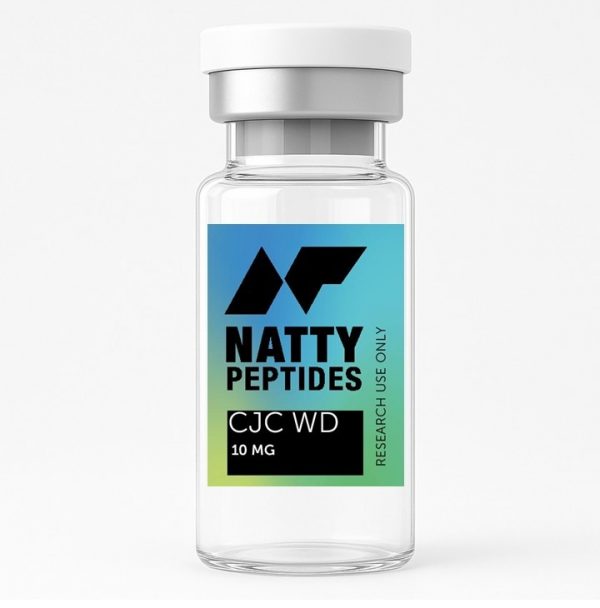
COA of CJC-1295 DAC.pdf (1)new Why Choose CJC-1295 (GHRH Analogue) WITH DAC? CJC-1295 with DAC is a synthetic analogue of growth hormone-releasing hormone (GHRH) and a potent growth hormone secretagogue (GHS). It was developed by ConjuChem Biotechnologies in the mid-2000s as a research tool to overcome the primary limitation of earlier GHRH fragments: their very short half-life in the body. Understanding its distinct origins and mechanisms provides important context for researchers. The History & Origins CJC-1295 appears to have first been identified in 2005 as part of a research program led by ConjuChem Biotechnology, in which derivatives of human GHRH were being developed in an attempt to overcome the short half-life of GHRH. The peptide represents a modified form of GHRH (1-29), also known as Sermorelin, with key amino acid substitutions that enhance its stability and pharmacokinetic profile. The original CJC-1295 from ConjuChem contained the Drug Affinity Complex (DAC), a bioconjugation platform that improves the peptide’s ability to bind with blood proteins. Studies conducted in healthy human subjects were first published in 2006; however, ConjuChem withdrew CJC-1295 with DAC from clinical trials later that year. The peptide remains an investigational compound with no FDA approval for any indication and is classified as a prohibited substance under the WADA S2 category. How It Works: Distinct Mechanisms CJC-1295 with DAC operates through a mechanism that distinguishes it from other GHRH analogues and from its non-DAC counterpart, providing a unique tool for endocrine research. GHRH Receptor Agonist Mechanism Binds pituitary GHRH receptors — CJC-1295 binds to GHRH receptors on the somatotroph cells of the anterior pituitary, triggering Gs-coupled receptor signaling that leads to adenylyl cyclase activation, cAMP accumulation, and protein kinase A (PKA) phosphorylation. This stimulates GH gene transcription and pulsatile GH secretion. Four amino acid substitutions — The peptide incorporates D-Ala at position 2, Gln at position 8, Ala at position 15, and Leu at position 27, conferring resistance to dipeptidyl peptidase-4 (DPP-4) and other plasma proteases without loss of receptor affinity. Albumin conjugation via DAC — The DAC modification includes a maleimidopropionyl biotin linker that covalently binds to circulating albumin (specifically cysteine-34) after subcutaneous injection. This protects the peptide from renal filtration and proteolytic clearance, extending its half-life to approximately 6-8 days. Effects on Growth Hormone and IGF-1 Sustained GH elevation — A single dose of CJC-1295 with DAC has been shown to increase plasma GH levels by 2- to 10-fold for 6 days or longer. Prolonged IGF-1 elevation — Plasma IGF-1 levels are elevated by 0.5- to 3-fold for 9 to 11 days following a single injection. With multiple doses, IGF-1 levels have been found to remain elevated for up to 28 days. Pulsatile Versus Tonic GH Release: A Key Research Distinction The DAC formulation raises an important physiological question in GH research. Normal GH physiology is characterized by discrete high-amplitude pulses separated by low-trough periods. CJC-1295 without DAC mimics this pulse pattern due to its 30-minute half-life. However, CJC-1295 with DAC maintains continuous GHRH receptor stimulation over days, which may produce a more tonic pattern of GH release—sometimes referred to as “GH bleed”. This sustained stimulation is a central pharmacological consideration in research applications. CAS Number: 863288-34-0 Molecular Formula: C₁₅₂H₂₅₂N₄₄O₄₂ Molecular Weight: ~3,367 g/mol Purity: ≥98% (HPLC) Form: Lyophilised powder Quantity: 10mg per vial Modification: Drug Affinity Complex (DAC) – albumin-binding moiety Laboratory research compound evaluated in controlled preclinical settings. Intended strictly for laboratory and educational research applications. For research use only. Restricted to in vitro laboratory experimentation and cannot be used in clinical or investigational studies, applied in any medical or therapeutic context, or distributed for purposes outside regulated laboratory research. No claims are made regarding growth hormone release, GHRH receptor activation, half-life extension, or any endocrine effect.
Related products