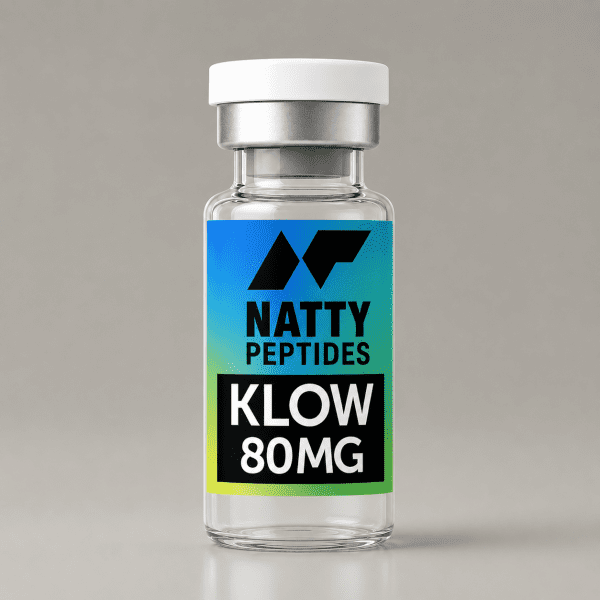
Why Choose the KLOW Stack? The KLOW stack is an advanced four-peptide research blend that expands upon the classic GLOW formulation by incorporating the potent anti-inflammatory peptide KPV. The name “KLOW” directly reflects this addition—it is the GLOW stack (GHK-Cu, BPC-157, and TB-500) with the addition of KPV. This formulation is often studied for its multi-pathway approach to tissue repair, inflammation modulation, and recovery research. Understanding the distinct backgrounds and mechanisms of each component provides important context for researchers. The History & Origins KPV (Lysine-Proline-Valine) is a synthetic tripeptide corresponding to the C-terminal amino acids 11-13 of alpha-melanocyte-stimulating hormone (α-MSH). Research first detailed the isolation of the KPV tripeptide in 1989, establishing it as the key amino acid sequence responsible for many of α-MSH’s anti-inflammatory characteristics. KPV is distinguished by its preserved anti-inflammatory and antimicrobial effects while lacking the pigmentary action of the parent molecule, making it valuable for inflammation research. GHK-Cu (Copper Tripeptide-1) is a naturally occurring copper-binding peptide first identified in human plasma in the 1970s. It has been studied for decades for its role in dermal remodeling, collagen synthesis, and tissue repair research. BPC-157 (Body Protection Compound-157) is a synthetic peptide derived from a protective protein found in gastric juice. First characterized in the 1990s, this 15-amino-acid sequence was isolated from gastric mucosal extracts and has demonstrated remarkable stability across different biological environments. TB-500 is a synthetic analogue of thymosin beta-4, a naturally occurring 43-amino-acid polypeptide found in virtually all human and animal cells. This peptide is highly conserved across species and plays fundamental roles in cellular differentiation, tissue remodeling, and wound healing processes. How They Work: Distinct But Complementary While these four peptides are often studied together in the KLOW stack, each operates through distinct biological pathways that address different aspects of tissue repair, inflammation, and regeneration. KPV Research Mechanisms Exhibits potent anti-inflammatory effects through inhibition of the NF-κB pathway, a major transcription factor involved in the inflammatory response Reduces accumulation of polymorphonuclear leukocytes and inhibits inflammatory cell migration Suppresses pro-inflammatory cytokine production including IL-1β and IL-8 Demonstrates antioxidant properties by inhibiting reactive oxygen species (ROS) production Shown to reduce inflammation through mechanisms distinct from melanocortin receptor signaling, likely acting through inhibition of IL-1β functions GHK-Cu Research Mechanisms Binds to copper and delivers it to tissues, acting as an essential cofactor for enzymatic processes involved in wound healing and collagen synthesis Stimulates collagen and glycosaminoglycan production, critical for skin structure and elasticity research Exhibits antioxidant properties and has been shown to modulate gene expression associated with tissue remodeling Supports wound healing and cellular repair mechanisms BPC-157 Research Mechanisms Modulates angiogenesis through upregulation of vascular endothelial growth factor (VEGF) expression Influences nitric oxide synthase activity, affecting vascular tone and tissue perfusion Exhibits anti-inflammatory properties through modulation of pro-inflammatory cytokine production Promotes blood vessel formation and supports collagen production pathways TB-500 Research Mechanisms Regulates actin dynamics—binding to G-actin to facilitate cellular migration essential for wound healing Demonstrates potent angiogenic properties through endothelial cell migration and proliferation Modulates inflammatory responses and promotes resolution pathways Exhibits anti-inflammatory and tissue regeneration properties in preclinical studies The Synergistic Potential Researchers often study these peptides together because their mechanisms are complementary rather than duplicative. The addition of KPV to the GLOW stack adds a dedicated anti-inflammatory component to an already robust tissue repair formulation: KPV is frequently examined for its potent anti-inflammatory and antioxidant effects—targeting inflammatory signaling pathways and cytokine production at the cellular level. Its mechanisms appear distinct from melanocortin receptor pathways, suggesting it may act through inhibition of IL-1β functions and suppression of NF-κB signaling. GHK-Cu is associated with collagen remodeling, skin regeneration, and antioxidant protection—addressing the structural and aesthetic aspects of tissue health. BPC-157 is associated with localized tissue repair—tendon and ligament structures, gastrointestinal tissue, and muscle-tendon junctions—focusing on vascular signaling and inflammatory modulation. TB-500 is associated with systemic effects—influencing cytoskeletal behavior, cell migration dynamics, and structural remodeling across multiple tissues. Together, they represent a multi-pathway approach to tissue repair and inflammation research: KPV addressing inflammatory signaling and oxidative stress, GHK-Cu focusing on collagen and skin remodeling, BPC-157 targeting vascular signaling and localized repair, while TB-500 addresses cellular movement and systemic structural organizatio For research use only. Restricted to in vitro laboratory experimentation and cannot be: Used in clinical or investigational studies Applied in any medical or therapeutic context Distributed for purposes outside regulated laboratory research COA of BPC-157 COA of TB500 View GHK-CU Certificate of Analysis
Related products