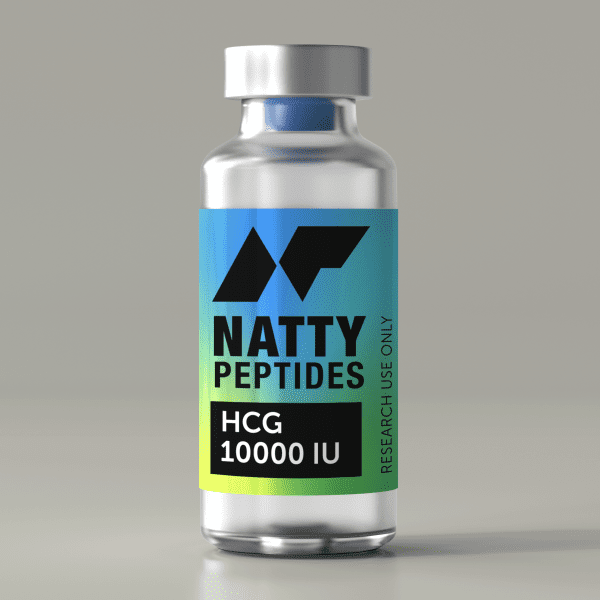
View HCG Certificate of Analysis Why Choose HCG (Human Chorionic Gonadotropin)? Human Chorionic Gonadotropin (hCG) is a naturally occurring glycoprotein hormone that plays a fundamental role in early pregnancy and reproductive biology. Its unique structure, extended half-life, and specific receptor interactions make it a valuable tool in fertility research and endocrine studies. Understanding its origins and distinct mechanisms provides important context for researchers. The History & Origins HCG is a pregnancy-specific hormone that is critical for the development of the fetus and placenta. It is primarily produced by the syncytiotrophoblast cells of the placenta and is detectable in maternal blood as early as 2 days after implantation. The discovery of hCG dates back to 1927 when Aschheim and Zondek first observed that the urine of pregnant women contained abundant quantities of a gonadotropin with luteinizing activity. Early works by Aschner, Fellner, and Hirose between 1912 and 1919 had already demonstrated a hormonal link between the placenta and the uterus, but it was Aschheim and Zondek who established that a gonad-stimulating substance was produced during pregnancy. The name human chorionic gonadotropin was subsequently conceived, with “chorion” deriving from the Latin chordata (meaning afterbirth) and “gonadotropin” reflecting the hormone’s action on the gonads. How It Works: Distinct Mechanisms HCG operates through a well-defined mechanism of action centered on the luteinizing hormone/choriogonadotropin receptor (LH/CG receptor), which it shares with luteinizing hormone (LH). Structural Composition HCG is a heterodimeric glycoprotein composed of two non-covalently joined subunits: Alpha (α) subunit — Identical to the alpha subunit found in other glycoprotein hormones including LH, follicle-stimulating hormone (FSH), and thyroid-stimulating hormone (TSH). It contains two N-glycosylation sites and is encoded by a single gene (CGA). Beta (β) subunit — Unique to hCG and confers receptor and biological specificity. The hCGβ subunit is encoded by a cluster of genes (CGB) and contains two sites of N-glycosylation and four sites of O-glycosylation. The β-subunit possesses a unique carboxy-terminal region that is approximately 30 amino acids longer than that of the β-subunit of LH, a feature that contributes significantly to its longer half-life. LH/CG Receptor Activation Both hCG and LH bind to the same LH/CG receptor. However, hCG exhibits a higher binding affinity (approximately 2x that of LH) and a significantly longer half-life — approximately 32-33 hours for hCG compared to 23 hours for LH. Research has shown that the high affinity of hCG is primarily due to its low dissociation rate from the receptor. This property makes hCG a “superagonist” of LH, capable of providing sustained stimulation of the recepto
Related products